DO you, my child, love every one with the pure love of charity,
but have no friendship save with those whose intercourse is good
and true, and the purer the bond which unites you so much higher
will your friendship be. If your intercourse is based on science
it is praiseworthy, still more if it arises from a participation
in goodness, prudence, justice and the like; but if the bond of
your mutual liking be charity, devotion and Christian perfection,
God knows how very precious a friendship it is! Precious because
it comes from God, because it tends to God, because God is the
link that binds you, because it will last for ever in Him. Truly
it is a blessed thing to love on earth as we hope to love in
Heaven, and to begin that friendship here which is to endure for
ever there. I am not now speaking of simple charity, a love due
to all mankind, but of that spiritual friendship which binds
souls together, leading them to share devotions and spiritual
interests, so as to have but one mind between them. Such as these
may well cry out, "Behold, how good and joyful a thing it is,
brethren, to dwell together in unity!" [106] Even so, for the
"precious ointment" of devotion trickles continually from one
heart to the other, so that truly we may say that to such
friendship the Lord promises His Blessing and life for evermore.
To my mind all other friendship is but as a shadow with respect
to this, its links mere fragile glass compared to the golden bond
of true devotion. Do you form no other friendships. I say "form,"
because you have no right to cast aside or neglect the natural
bonds which draw you to relations, connexions, benefactors or
neighbours. My rules apply to those you deliberately choose to
make. There are some who will tell you that you should avoid all
special affection or friendship, as likely to engross the heart,
distract the mind, excite jealousy, and what not. But they are
confusing things. They have read in the works of saintly and
devout writers that individual friendships and special intimacies
are a great hindrance in the religious life, and therefore they
suppose it to be the same with all the world, which is not at all
the case. Whereas in a well-regulated community every one's aim
is true devotion, there is no need for individual intercourse,
which might exceed due limits;--in the world those who aim at a
devout life require to be united one with another by a holy
friendship, which excites, stimulates and encourages them in
well-doing. Just as men traversing a plain have no need to hold
one another up, as they have who are amid slippery mountain
paths, so religious do not need the stay of individual
friendships; but those who are living in the world require such
for strength and comfort amid the difficulties which beset them.
In the world all have not one aim, one mind, and therefore we
must take to us congenial friends, nor is there any undue
partiality in such attachments, which are but as the separation
of good from evil, the sheep from the goats, the bee from the
drone--a necessary separation.
No one can deny that our Dear Lord loved S. John, Lazarus,
Martha, Magdalene, with a specially tender friendship, since we
are told so in Holy Scripture; and we know that S. Paul dearly
loved S. Mark, S. Petronilla, as S. Paul Timothy and Thecla.
[107] S. Gregory Nazianzen boasts continually of his friendship
with the great S. Basil, of which he says: "It seemed as though
with two bodies we had but one soul, and if we may not believe
those who say that all things are in all else, at least one must
affirm that we were two in one, and one in two --the only object
that both had being to grow in holiness, and to mould our present
life to our future hopes, thereby forsaking this mortal world
before our death." And S. Augustine says that S. Ambrose loved S.
Monica by reason of her many virtues, and that she in return
loved him as an Angel of God.
What need to affirm so unquestionable a fact! S. Jerome, S.
Augustine, S. Gregory, S. Bernard, and all the most notable
servants of God, have had special friendships, which in nowise
hindered their perfection. S. Paul, in describing evil men, says
that they were "without natural affection," [108] i.e. without
friendship. And S. Thomas, in common with other philosophers,
acknowledges that friendship is a virtue, and he certainly means
individual friendships, because he says that we cannot bestow
perfect friendship on many persons. So we see that the highest
grace does not lie in being without friendships, but in having
none which are not good, holy and true.
[106] Ps. 133:1 - [Song of Ascents] How good, how delightful it is to live as brothers all together! (New Jerusalem Bible)
[107] S. Thecla (V.M.) was a native of Lycaonia, converted (so
say S. Augustine, S. Ambrose, S. Epiphanius, and others of the
Fathers) by S. Paul, who kindled so strong a love of virginity in
her heart that she broke off her intended marriage, and devoted
herself to Christ. She is said to have followed S. Paul in
several of his journeys, and a very ancient Martyrology, which
bears the name of S. Jerome, published by Florentinus, says that
she was miraculously delivered unhurt from the persecutors'
flames at Rome. It seems doubtful whether she died a natural or a
martyr's death. The first Christian Emperors built a great Church
at Seleucia, where she died.
[108] Rom. 1:31 - without brains, honour, love or pity. (New Jerusalem Bible)
For more sections within the "Introduction to the Devout Life":
Monday, August 25, 2008


Sunday, August 24, 2008
Peter Singer's Animal Rights and the Catholic Church
Philosopher and animal rights activist Peter Singer argues that the moral circle should be extended to include all sentient beings. "Love your neighbor" and "love your enemy" should encompass all "sentient beings" such as lions, lobster, monkeys, snakes, sharks, etc. With reference to Singer's work, critically evaluate his arguments against speciesism (akin to racism or sexism).
Summary:
Bible and Church Quotations:
- http://sites.google.com/site/catholiclifetimereadingplan/file-cabinet/ET100_Peter_Singer.pdf [A4 paper, 4 pages]
Warning: A single possible reference by Peter Singer (or someone) goes into an area that is pretty disgusting, but is mentioned in the Bible as sinful behavior.
Summary:
- Introduction
- Expanding Moral Justice to all Sentient Creatures with Interests
- Animal Research and Human Medical Care
- Peter Singer's Interest-based Utilitarianism
- Conclusion
- Expanded Footnotes
- Libreria Editrice Vaticana, Catechism of the Catholic Church, para #2415, 1994.
- John Paul II, Centesimus annus 37-38
- Bibliography
Bible and Church Quotations:
- "'Please allow your servants a ten days' trial, during which we are given only vegetables to eat and water to drink. You can then compare our looks with those of the boys who eat the king's food; go by what you see, and treat your servants accordingly.' The man agreed to do what they asked and put them on ten days' trial. When the ten days were over, they looked better and fatter than any of the boys who had eaten their allowance from the royal table; so the guard withdrew their allowance of food and the wine they were to drink, and gave them vegetables. To these four boys God gave knowledge and skill in every aspect of literature and learning; Daniel also had the gift of interpreting every kind of vision and dream." (Daniel 1:12-17) [New Jerusalem Bible]
- "The upright has compassion on his animals, but the heart of the wicked is ruthless. " (Proverbs 12:10) [New Jerusalem Bible]
- The lion will eat hay like the ox. The infant will play over the den of the adder; the baby will put his hand into the viper's lair. No hurt, no harm will be done on all my holy mountain, for the country will be full of knowledge of Yahweh as the waters cover the sea.'' (Isaiah 11:6-9) [New Jerusalem Bible]
- The wolf and the young lamb will feed together, the lion will eat hay like the ox, and dust be the serpent's food. No hurt, no harm will be done on all my holy mountain, Yahweh says. (Isaiah 65:25) [New Jerusalem Bible]
- The seventh commandment enjoins respect for the integrity of creation. Animals, like plants and inanimate beings, are by nature destined for the common good of past, present, and future humanity. Use of the mineral, vegetable, and animal resources of the universe cannot be divorced from respect for moral imperatives. Man's dominion over inanimate and other living beings granted by the Creator is not absolute; it is limited by concern for the quality of life of his neighbor, including generations to come; it requires a religious respect for the integrity of creation. (Catechism of the Catholic Church, para #2415)
- Animals are God's creatures. He surrounds them with his providential care. By their mere existence they bless him and give him glory. Thus men owe them kindness. We should recall the gentleness with which saints like St. Francis of Assisi or St. Philip Neri treated animals. (Catechism of the Catholic Church, para #2416)
- Look at the birds of the air: they neither sow nor reap nor gather into barns, and yet your heavenly Father feeds them. Are you not of more value than they?' (Matthew 6:26)
- Bless the Lord, you whales and all creatures that move in the waters, sing praise to him and highly exalt him for ever. Bless the Lord, all birds of the air, sing praise to him and highly exalt him for ever, Bless the Lord, all beasts and cattle, sing praise to him and highly exalt him for ever. (Daniel 3:79-81)
- God entrusted animals to the stewardship of those whom he created in his own image. 198 Hence it is legitimate to use animals for food and clothing. They may be domesticated to help man in his work and leisure. Medical and scientific experimentation on animals is a morally acceptable practice if it remains within reasonable limits and contributes to caring for or saving human lives. (Catechism of the Catholic Church, para #2417)
- It is contrary to human dignity to cause animals to suffer or die needlessly. It is likewise unworthy to spend money on them that should as a priority go to the relief of human misery. One can love animals; one should not direct to them the affection due only to persons. (Catechism of the Catholic Church, para #2418)
- And God blessed Noah and his sons, and said to them, "Be fruitful and multiply, and fill the earth. The fear of you and the dread of you shall be upon every beast of the earth, and upon every bird of the air, upon everything that creeps on the ground and all the fish of the sea; into your hand they are delivered. Every moving thing that lives shall be food for you; and as I gave you the green plants, I give you everything. Only you shall not eat flesh with its life, that is, its blood. (Genesis 9:1-4)
Friday, August 22, 2008
"God, Sex, and the Meaning of Life: An Introduction to Pope John Paul II's Theology of the Body" by Christopher West
This is the first of 3 talks given by Christopher West at WYD 2008 Sydney. Source: http://www.xt3.com/

"Male and Female He Redeemed Them: Finding Sexual Redemption in a Pornographic World" by Christopher West
This is the second of 3 talks given by Christopher West at WYD 2008 Sydney.
Source: http://www.xt3.com/
Source: http://www.xt3.com/
On the Mystical Body of Christ (Mystici Corpus Christi) by Pope Pius XII
220 footnotes, most of it from Holy Scripture.
Anyone who prefers a simplistic view of Christ and the Gospel, devoid of mystery, needs to read the following passage.
Anyone who prefers a simplistic view of Christ and the Gospel, devoid of mystery, needs to read the following passage.
Ephesians 5:29-32 -- A man never hates his own body, but he feeds it and looks after it; and that is the way Christ treats the Church, because we are parts of his Body. This is why a man leaves his father and mother and becomes attached to his wife, and the two become one flesh. This mystery has great significance, but I am applying it to Christ and the Church.
{According to Christopher West, this is John Paul II's selection for what summarizes the Bible. This leads to the Theology of the Body.}
Thursday, August 21, 2008
Oral Tradition in the New Testament by David Palm
Does any New Testament author cite oral tradition as authoritative for doctrine? -- http://www.chnetwork.org/journals/sola/sola8.htm
This is a good question. :) I remember reading this almost 10 years ago now.
2 Thess 2:15 So then, brethren, stand firm and hold to the traditions which you were taught by us, either by word of mouth or by letter.
Exodus 15-18: The Journey Through the Desert
When doing Bible study meant to be shared with others, this an example of how I like to work. (combined with prayer before, during, after...and in your sleep).
• The New Jerusalem Bible (Nihil Obstat/Imprimatur)
– ISBN: 0232516502
– URL: [http://www.catholic.org/bible/]
• Catechism of the Catholic Church (Nihil Obstat/Imprimatur)
– ISBN: 0860123278
– URL: [http://www.kofc.org/publications/cis/catechism/index.cfm]
(with footnotes and citations)
– URL: [http://www.scborromeo.org/search.htm]
• The Navarre Bible Series (Nihil Obstat/Imprimatur)
– Available in print for the entire Bible, initiated by St.
Josemaría Escrivá
– URL: [http://groups.google.com.au/] Keyword: navarre "Exodus 16''
• Douay-Rheims Bible, Challoner Revision
– Sword module version 1.1 - [http://www.e-sword.net/]
– URL: [http://www.drbo.org/]
- http://sites.google.com/site/catholiclifetimereadingplan/file-cabinet/exodus.pdf [A4, 30 pages] {preparation and notes}
- http://sites.google.com/site/catholiclifetimereadingplan/file-cabinet/exodus_readings.pdf [A4, 7 pages] {summary of what to share for 1 evening}
- http://sites.google.com/site/catholiclifetimereadingplan/file-cabinet/exodus_questions.pdf [A4, 1 page] {half page question sheet}
Table of ContentsHTML-ized:
1 Exodus 15:22+ -- The Journey Through the Desert
Marah
1.1 1 Corinthians 10:1-6, 10-12 -- The Lessons of Israel's History
Commentary from the Navarre Bible: 1 Corinthians 10:1-6, 10-12
CCC 1094 - 1 Corinthians 10:1-6
2 Exodus 16 -- The manna and the quails
2.1 Numbers 11 -- The Halts in the Desert
Taberah
Kibroth-ha-Taavah. The people complain
The prayer of Moses
Yahweh replies
The spirit given to the elders
The quails
2.2 Deuteronomy 8:3,16-17
2.3 Psalms 78:18+
2.4 Psalms 105:40
2.5 Psalms 106:13-15
2.6 Wisdom 16:20-29
2.7 John 6: 26-58 -- The Discourse on the Bread of Life (Continuation)
Commentary from the Navarre Bible: John 6:28-35
2.8 Exodus 14:11+
3 Exodus 17 -- The water from the rock
3.1 Exodus 17:3-7 -- The Water from the Rock
Commentary from the Navarre Bible: Exodus 17:3-7
3.2 Exodus 17:8-13 -- A battle against the Amalekites
Commentary from the Navarre Bible: Exodus 17:8-13
3.3 Numbers 20:1-13 -- Moses Brings Water from the Rock
Commentary from the Navarre Bible: Numbers 20:1-13
3.4 Exodus 14:11+
3.5 John 7:38r
Note:
3.6 1 Samuel 15:3+ -- Holy war against the Amalekites
Commentary from the Navarre Bible: 1 Samuel 15:1-35
4 Exodus 18 -- The meeting of Jethro and Moses / The appointment of judges
The appointment of judges
4.1 Hebrews 11:32-40 -- The Faith of Moses, of the Judges and of the Prophets
Commentary from the Navarre Bible: Hebrews 11:32-40
4.2 Isaiah 11:1-10 -- The New Descendant of David / The Return of the Exiles
The Return of the Exiles
Commentary from the Navarre Bible: Isaiah 11:1-10
4.3 Isaiah 9:2-4, 6-7 -- The Prince of Peace
Commentary from the Navarre Bible: Isaiah 9:2-4, 6-7
A List of used References
• The New Jerusalem Bible (Nihil Obstat/Imprimatur)
– ISBN: 0232516502
– URL: [http://www.catholic.org/bible/]
• Catechism of the Catholic Church (Nihil Obstat/Imprimatur)
– ISBN: 0860123278
– URL: [http://www.kofc.org/publications/cis/catechism/index.cfm]
(with footnotes and citations)
– URL: [http://www.scborromeo.org/search.htm]
• The Navarre Bible Series (Nihil Obstat/Imprimatur)
– Available in print for the entire Bible, initiated by St. Josemaría Escrivá
– URL: [http://groups.google.com.au/] Keyword: navarre "Exodus 16"
• Douay-Rheims Bible, Challoner Revision
– Sword module version 1.1 - [http://www.e-sword.net/]
– THE HOLY BIBLE TRANSLATED FROM THE LATIN VULGATE DILIGENTLY
COMPARED WITH THE HEBREW, GREEK, AND OTHER EDITIONS IN DIVERS
LANGUAGES THE OLD TESTAMENT FIRST PUBLISHED BY THE ENGLISH
COLLEGE AT DOUAY, A.D. 1609 AND THE NEW TESTAMENT FIRST
PUBLISHED BY THE ENGLISH COLLEGE AT RHEIMS, A.D. 1582 WITH
ANNOTATIONS, REFERENCES, AND AN HISTORICAL AND CHRONOLOGICAL
INDEX
– THE WHOLE REVISED AND DILIGENTLY COMPARED WITH THE LATIN
VULGATE BY BISHOP RICHARD CHALLONER, A.D. 1749-1752 PUBLISHED
WITH THE APPROBATION OF HIS EMINENCE JAMES CARDINAL GIBBONS
ARCHBISHOP OF BALTIMORE
– URL: [http://www.drbo.org/]
B Catechism of the Catholic Church
B.1 Exodus 15:26 (CCC 1502)
B.2 Exodus 16:19-21 (CCC 2837)
B.3 Exodus 16:19 (CCC 2836)
B.4 Exodus 17:1-6 (CCC 694)
B.5 Exodus 17:2-7 (CCC 2119)
B.6 Exodus 17:8-13 (CCC 2577)
B.7 1 Corinthians 10:1-11 (CCC 129)
B.8 1 Corinthians 10:1-6 (CCC 1094)
B.9 1 Corinthians 10:1-2 (CCC 697)
B.10 1 Corinthians 10:2 (CCC 117)
B.11 1 Corinthians 10:4 (CCC 694)
B.12 1 Corinthians 10:6 (CCC 128)
B.13 1 Corinthians 10:9 (CCC 2119)
B.14 1 Corinthians 10:11 (CCC 117, CCC 128, CCC 670, CCC 2175)
B.15 John 6:28-58 (CCC 2835)
B.16 Numbers 11:24-25 (CCC 1541)
B.17 Hebrews 11:39-40 (CCC 147)
B.18 Isaiah 11:1-9 (CCC 672)
B.19 Isaiah 11:1,2 (CCC 712, CCC 1831, CCC 436, CCC 536, CCC 1286)
B.20 Providence and secondary causes
C Other noted links in the Navarre Bible from Google Groups
C.1 Luke 1:53 -- The Magnificat
Commentary from the Navarre Bible: Luke 1:53
C.2 Mark 6:34-44 -- First Miracle of the Loaves
Commentary from the Navarre Bible: Mark 6:34-44
C.3 Revelation 11:19; 12:1-6, 10 -- The Sounding of the Seventh Trumpet / The Woman Fleeing from the Dragon
Commentary from the Navarre Bible: Revelation 11:19; 12:1-6, 10
• The New Jerusalem Bible (Nihil Obstat/Imprimatur)
– ISBN: 0232516502
– URL: [http://www.catholic.org/bible/]
• Catechism of the Catholic Church (Nihil Obstat/Imprimatur)
– ISBN: 0860123278
– URL: [http://www.kofc.org/publications/cis/catechism/index.cfm]
(with footnotes and citations)
– URL: [http://www.scborromeo.org/search.htm]
• The Navarre Bible Series (Nihil Obstat/Imprimatur)
– Available in print for the entire Bible, initiated by St.
Josemaría Escrivá
– URL: [http://groups.google.com.au/] Keyword: navarre "Exodus 16''
• Douay-Rheims Bible, Challoner Revision
– Sword module version 1.1 - [http://www.e-sword.net/]
– URL: [http://www.drbo.org/]
The Hidden Power of Kindness by Fr. Lawrence G. Lovasik
I've wanted to read "The Hidden Power of Kindness" for some time. I have no clue of its contents yet. :)
Fr. Lawrence G. Lovasik is the same author of "Clean Love in Courtship". It is included in its entirety in the pdf below on "Holy Friendship, Courtship and Marriage".
The problem of friendship and courtship is tricky. I think St. Francis de Sales clarifies issues by Fr. Lawrence G. Lovasik that are only understood in a fully Christian sense. Recall that Jesus had existing friendships with women. Lay people need holy friendships to survive in a world that denies God. This includes even after the sacrament of marriage. This does not mean that spiritual direction is not needed. Grace and virtue are required in everything that we do. Yes, there are holy and evil friendships. St. Francis de Sales covers the good, the bad, and the inbetween.
Fr. Lawrence G. Lovasik is the same author of "Clean Love in Courtship". It is included in its entirety in the pdf below on "Holy Friendship, Courtship and Marriage".
- http://sites.google.com/site/catholiclifetimereadingplan/file-cabinet/holy_friendship_courtship_and_marriage.pdf [A4 paper, 31 pages]
The problem of friendship and courtship is tricky. I think St. Francis de Sales clarifies issues by Fr. Lawrence G. Lovasik that are only understood in a fully Christian sense. Recall that Jesus had existing friendships with women. Lay people need holy friendships to survive in a world that denies God. This includes even after the sacrament of marriage. This does not mean that spiritual direction is not needed. Grace and virtue are required in everything that we do. Yes, there are holy and evil friendships. St. Francis de Sales covers the good, the bad, and the inbetween.
Wednesday, August 20, 2008
The Way of Perfection by St. Teresa of Avila (Church Doctor)
Of all St. Teresa’s writings, The Way of Perfection is the most easily understood.
- PDF: http://sites.google.com/site/catholiclifetimereadingplan/file-cabinet/wayofperfection.pdf?attredirects=0 [US Letter, 128 pages]
Little Talks with God (aka The Dialogues) by St. Catherine of Siena (Church Doctor)
This looks relatively short and probably the most interesting thing that I haven't read yet.

The 25th child of a wool dyer in northern Italy, St. Catherine started having mystical experiences when she was only 6, seeing guardian angels as clearly as the people they protected. She became a Dominican tertiary (layperson, not a nun) when she was 16, and continued to have visions of Christ, Mary, and the saints. St. Catherine was one of the most brilliant theological minds of her day, although she never had any formal education. She persuaded the Pope to go back to Rome from Avignon, in 1377, and when she died she was endeavoring to heal the Great Western Schism. In 1375 Our Lord give her the Stigmata, which was visible only after her death. Her spiritual director was Blessed Raymond of Capua. St, Catherine's letters, and a treatise called "a dialogue" are considered among the most brilliant writings in the history of the Catholic Church. She died when she was only 33, and her body was found incorrupt in 1430. -- http://www.catholic.org/saints/saint.php?saint_id=9
- Text: http://www.cfpeople.org/Books/Dialog/cfptoc.htm
- Audio: http://www.archive.org/details/CathDialog1
St. Catherine of Siena
Doctor of the Church
Doctor of the Church
Aquinas's Shorter Summa: Saint Thomas's Own Concise Version of His Summa Theologica by St. Thomas Aquinas (Church Doctor)
This book is also known as:
- Compendium Theologiae: Compendium of Theology
- Light of Faith: The Compendium of Theology
- Aquinas's Shorter Summa: Saint Thomas's Own Concise Version of His Summa Theologica
- Summa of the Summa (?)
The Compendium theologiae breaks off at this point. Death prevented St. Thomas from finishing the book. His opusculum, Expositio orationis dominicae, though probably a reportatio, gives us an idea of the plan he very likely would have followed in completing Part II of the Compendium. Part III, on the virtue of charity, was to have developed the theme indicated in the opening chapter of the present work, that we should carry out God’s will through love.
Scrutiny on 1 Cor 13 results in WYD theme in the Catechism?
It was funny prior to WYD. A study of 1 Cor 13 on "love" revealed the WYD theme in the Catechism in paragraph 735. It's the first paragraph listed in the Catechism with stuff under 1 Cor 13. See also at bottom: CCC 1826, 953 and 25.
CCC 735 He, then, gives us the "pledge" or "first fruits" of our inheritance: the very life of the Holy Trinity, which is to love as "God [has] loved us." 127 This love (the "charity" of 1 Cor 13) is the source of the new life in Christ, made possible because we have received "power" from the Holy Spirit. 128
128 Acts 1:8; cf. I Cor 13.
CITED TEXT:
1826 "If I . . . have not charity," says the Apostle, "I am nothing." Whatever my privilege, service, or even virtue, "if I . . . have not charity, I gain nothing." 103 Charity is superior to all the virtues. It is the first of the theological virtues: "So faith, hope, charity abide, these three. But the greatest of these is charity." 104
953 Communion in charity. In the sanctorum communio, "None of us lives to himself, and none of us dies to himself." 489 "If one member suffers, all suffer together; if one member is honored, all rejoice together. Now you are the body of Christ and individually members of it." 490 "Charity does not insist on its own way." 491 In this solidarity with all men, living or dead, which is founded on the communion of saints, the least of our acts done in charity redounds to the profit of all. Every sin harms this communion.
25 To conclude this Prologue, it is fitting to recall this pastoral principle stated by the Roman Catechism:
CCC 735 He, then, gives us the "pledge" or "first fruits" of our inheritance: the very life of the Holy Trinity, which is to love as "God [has] loved us." 127 This love (the "charity" of 1 Cor 13) is the source of the new life in Christ, made possible because we have received "power" from the Holy Spirit. 128
128 Acts 1:8; cf. I Cor 13.
CITED TEXT:
Acts 1:8
But you shall receive power when the Holy Spirit has come upon you; and you shall be my witnesses in Jerusalem and in all Judea and Samaria and to the end of the earth.
1 Corinthians 13
If I speak in the tongues of men and of angels, but have not love, I am a noisy gong or a clanging cymbal. And if I have prophetic powers and understand all mysteries and all knowledge, and if I have all faith, so as to remove mountains, but have not love, I am nothing. If I give away all I have, and if I deliver my body to be burned, but have not love, I gain nothing.
Love is patient and kind; love is not jealous or boastful; it is not arrogant or rude. Love does not insist on its own way; it is not irritable or resentful; it does not rejoice at wrong but rejoices in the right. Love bears all things, believes all things, hopes all things, endures all things.
Love never ends; as for prophecies, they will pass away; as for tongues, they will cease; as for knowledge, it will pass away. For our knowledge is imperfect and our prophesy is imperfect; but when the perfect comes, the imperfect will pass away. When I was a child, I spoke like a child, I thought like a child, I reasoned like a child; when I became a man, I gave up childish ways. For now we see in a mirror dimly, but then face to face. Now I know in part; then I shall understand fully, even as I have been fully understood. So faith, hope, love abide, these three; but the greatest of these is love.
1826 "If I . . . have not charity," says the Apostle, "I am nothing." Whatever my privilege, service, or even virtue, "if I . . . have not charity, I gain nothing." 103 Charity is superior to all the virtues. It is the first of the theological virtues: "So faith, hope, charity abide, these three. But the greatest of these is charity." 104
953 Communion in charity. In the sanctorum communio, "None of us lives to himself, and none of us dies to himself." 489 "If one member suffers, all suffer together; if one member is honored, all rejoice together. Now you are the body of Christ and individually members of it." 490 "Charity does not insist on its own way." 491 In this solidarity with all men, living or dead, which is founded on the communion of saints, the least of our acts done in charity redounds to the profit of all. Every sin harms this communion.
25 To conclude this Prologue, it is fitting to recall this pastoral principle stated by the Roman Catechism:
The whole concern of doctrine and its teaching must be directed to the love that never ends. Whether something is proposed for belief, for hope or for action, the love of our Lord must always be made accessible, so that anyone can see that all the works of perfect Christian virtue spring from love and have no other objective than to arrive at love."19
Tuesday, August 19, 2008
"Protestant Minister becomes Catholic" by Scott Hahn
The Conversion of Scott Hahn. This should play with Windows Media Player. The quality isn't stellar, because it's based on a 2MB speex file. Windows doesn't handle speex by default, so you have an aac file instead. If the file was in mp3 format, it would be too large to download or the quality too poor to understand.
For those that don't know, Scott Hahn is a huge author of catholic books about Scripture these days and has been Professor at the Franciscan University of Steubenville for a number of years. References are too numerous to mention and difficult to keep up with this guy. -- http://www.scotthahn.com/
Do you have a few hours? If Jesus asked you, would you say no? :)
- http://catholicaudio.blogspot.com/2007/11/dr-scott-hahn-answering-common.html
- Single mp3 file of available audio (versus the written material): http://www.bringyou.to/ScottHahnCatholicObjectionsCOMPLETE.mp3
Catechism of the Catholic Church
define: catechism
catechism1 [ˈkӕtikizəm] noun
a book (especially religious) of instructions by means of question and answer
From personal experience, "catechism" is an ugly sounding word of non-English origin that to many English-speaking non-catholics has negative connotation. It is hardly pronounced or uttered with poetic intention. It rolls off the tongue like a rough cut piece of timber that can be harmful to those nearby, including yourself. See also: catechumen. Some also say, see: Antichrist.The official Catechism of the Catholic Church is easily searched online:
denotative (intended) meaning of "catechism" = teaching, usually used by catholic or orthodox denominations
- Quick: http://www.scborromeo.org/ccc.htm
- Thorough with footnotes and references included: http://www.kofc.org/publications/cis/catechism/index.cfm
- Direct: http://www.vatican.va/archive/catechism/ccc_toc.htm
catechism1 [ˈkӕtikizəm] noun
a book (especially religious) of instructions by means of question and answer
- Arabic: كِتابٌ تَعْليميٌّ دينيٌّ بِطَريقَةِ السؤالِ والجَواب
- Chinese (Simplified): 问答集,问答教学法
- Chinese (Traditional): 問答集,問答教學法
- Czech: katechismus
- Danish: katekismus
- Dutch: catechismus
- Estonian: katekismus
- Finnish: katekismus
- French: catéchisme
- German: der Katechismus
- Greek: κατήχηση
- Hungarian: katekizmus, káté
- Icelandic: kennslubók (spurningar og svör), (fermingar-)kver
- Indonesian: katekisme
- Italian: catechismo; (prontuario a domande e risposte)
- Japanese: 教義問答書
- Korean: 교리 문답집, 문답식 교과서
- Latvian: katķisms
- Lithuanian: katekizmas
- Norwegian: katekisme
- Polish: katechizm
- Portuguese (Brazil): catecismo
- Portuguese (Portugal): catecismo
- Romanian: catehism
- Russian: катехизис
- Slovak: katechizmus
- Slovenian: katekizem
- Spanish: catecismo
- Swedish: katekes
- Turkish: sorulu-cevaplı din öğrenim kitabı; ilmihal
The Lord of the Rings by J. R. R. Tolkien
It sometimes perplexes me that fans of J.R.R. Tolkien are unaware of his catholic identity and aim. Gandalf and Frodo are good examples of Christian behavior in their treatment towards Gollum.
- MP3 audio: Tolkien's Worldview: How the Greatest Book of the Century is a Religious Book by Peter Kreeft (April 3rd, 2003) {mentioned at http://catholicaudio.blogspot.com/}
Introduction to the Devout Life by St. Francis de Sales (Church Doctor)
This book has a few specific chapters on friendship that are very very valuable.
Download this handy PDF for A4 paper:
Download this handy PDF for A4 paper:
- http://sites.google.com/site/catholiclifetimereadingplan/file-cabinet/intro_devout_life_brief.pdf (emphasis on the practice of virtues and friendship)
- Full version at a respectable website: http://www.catholictreasury.info/books/devout_life/
Uniformity with God's Will by St. Alphonso Liguori (Church Doctor)
Public domain, whoohoo.. pdf should be forthcoming.
Sunday, August 17, 2008
The Biblical Basis for the Catholic Faith by John Salza
I prefer "Bible Basics" by Steve Kellmeyer, but John Salza's website (http://www.scripturecatholic.com/) covers a few additional portions of Scripture not mentioned in "Bible Basics". Look at "Bible Basics" first, and if you want another resource to support it, use the URL below.
A Catholic Lifetime Reading Plan by Fr. John McCloskey
Source:
http://www.holyspiritinteractive.net/columns/johnmccloskey/perspectives/09.asp
Catholicism Explained/Theology
History and Culture
Holy Men and Women
Literary Classics
Spiritual Classics
Spiritual Reading
Miscellaneous
http://www.holyspiritinteractive.net/columns/johnmccloskey/perspectives/09.asp
Father John C. McCloskey is a priest of the Prelature of Opus Dei and a research Fellow at the Faith and Reason Institute. Father John's articles and reviews have been published in major Catholic and secular periodicals, including Catholic World Report, Crisis Magazine, The Wall Street Journal, National Catholic Register, Washington Times, the New York Times, and ACEPRENSA. Fr. John puts together a list of one hundred essential Catholic books for your library.
Catholicism Explained/Theology
- Catechism of the Catholic Church
- The Spirit of Catholicism by Karl Adams
- Spirit and Forms of Protestantism by Louis Bouyer
- Christianity for Modern Pagans by Peter Kreeft
- The Lord by Romano Guardini
- Essay on Development of Christian Doctrine by Cardinal Newman
- Parochial and Plain Sermons by Cardinal Newman
- End of the Modern World by Romano Guardini
- Rome Sweet Home by Scott & Kimberly Hahn
- Fundamentals of Catholic Dogma by Ludwig Ott
- The Four Cardinal Virtues by Josef Pieper
History and Culture
- The Great Heresies by Hilaire Belloc
- How The Reformation Happened by Hilaire Belloc
- Survivals and New Arrivals by Hilaire Belloc
- Christendom I: Founding of Christendom by Warren Carroll
- Christendom II: The Building of Christendom by Warren Carroll
- Christendom III: The Glory of Christendom by Warren Carroll
- Christendom IV: The Cleaving of Christendom by Warren Carroll
- Triumph : The Power and the Glory of the Catholic Church by H. W. Crocker III
- Enthusiasm by Ronald Arbuthnott Knox
- Love of Learning and the Desire for God by Jean Leclercq
- Christianity and European Culture by Christopher Dawson
- Our Lady of Fatima by William T. Walsh
Holy Men and Women
- Something Beautiful for God by Malcolm Muggeridge
- Apologia Pro Vita Sua by John Henry Newman
- Journal of a Soul by Pope John XXIII
- The Long Loneliness by Dorothy Day
- St. Thomas Aquinas: The Dumb Ox by G. K. Chesterton
- St. Francis of Assisi by G. K. Chesterton
- Seven Storey Mountain by Thomas Merton
- Mary of Nazareth by Federico Suarez
- Cure of Ars by F. Trochu
- Thomas More: A Portrait of Courage by Gerard B. Wegemer
- Witness to Hope: The Biography of Pope John Paul II by George Weigel
Literary Classics
- Lord of the World by Robert Hugh Benson
- The Diary of a Country Priest by George Bernanos
- Hopkins: Poetry and Prose by George Manley Hopkins
- Don Quixote by Miguel de Cervantes
- The Divine Comedy by Dante Alighieri
- Christianity and Culture by T. S. Eliot
- The Idea of a University by John Newman
- Silence by Shusaku Endo
- Quo Vadis by Henryk Sienkiewicz
- Lost in the Cosmos : The Last Self-Help Book by Walker Percy
- Love in the Ruins by Walker Percy
- Kristin Lavransdatter I: The Bridal Wreath by Sigrid Undset
- Kristin Lavransdatter II : The Wife by Sigrid Undset
- Kristin Lavransdatter III: The Cross by Sigrid Undset
- Flannery O'Connor: Complete Stories by Flannery O'Connor
- The Lord of the Rings by J. R. R. Tolkien
- Brideshead Revisited by Evelyn Waugh
Spiritual Classics
- Confessions of St. Augustine by St. Augustine
- Little Talks with God (modernized version of "The Dialogues") by St. Catherine
- City of God by St. Augustine
- The Problem of Pain by C. S. Lewis
- Dark Night of the Soul by St. John of the Cross
- Mere Christianity by C. S. Lewis
- The Screwtape Letters by C. S. Lewis
- The Everlasting Man by G. K. Chesterton
- Orthodoxy by G. K. Chesterton
- The Greatest Story Ever Told by Fulton Oursler
- Meditations from a Simple Path by Mother Teresa
- Interior Castle by St. Teresa of Avila
- The Way of Perfection by St. Teresa of Avila
- Story of a Soul by St. Therese of Lisieux
- My Way of Life/Summa Theologica by St. Thomas Aquinas
Spiritual Reading
- The Great Means of Salvation and Perfection by Alphonso Liguori
- Uniformity with God's Will by Alphonso Liguori
- Spiritual Theology by Jordan Aumann
- Frequent Confession by Benedict Baur
- In Silence with God by Benedict Baur
- Difficulties in Mental Prayer by Eugene Boylan
- The Tremendous Lover by Eugene Boylan
- Covenanted Happiness by Cormac Burke
- The Soul of the Apostolate by Jean-Baptiste Chautard
- Friends of God by Jose Maria Escriva
- Christ is Passing By by Jose Maria Escriva
- The Way, Furrow, The Forge by Jose Maria Escriva
- Way of the Cross by Jose Maria Escriva
- All for Jesus by Frederick W. Faber
- Abandonment to Divine Providence by Jean-Pierre De Caussade
- Introduction to Devout Life by Francis deSales
- Treatise on the Love of God by Francis deSales
- Three Ages of Interior Life Volume I by Fr. Reginald Garrigou-Lagrange
- Three Ages of Interior Life Volume II by Fr. Reginald Garrigou-Lagrange
- Sinner's Guide by Venerable Louis of Grenada
- The Imitation of Christ by Thomas A. Kempis
- True Devotion to the Holy Spirit by Luis M. Martinez
- True Devotions by Louis-Marie Grignion De Montfort
- The Hidden Power of Kindness by Lawrence G. Lovasik
- The Betrothed by Alessandro Manzoni
- The Sadness of Christ by Thomas More
- Conversation with Christ by Peter T. Rohrbach
- Spiritual Combat by Lorenzo Scupoli
- Theology and Sanity by Francis J. Sheed
- Theology for Beginners by Francis J. Sheed
- To Know Christ Jesus by Francis J. Sheed
- Life of Christ by Fulton J. Sheen
- Three to Get Married by Fulton J. Sheen
- The Spiritual Life by Adolphe Tanqueray
- Abba Father by Bonaventure Perquin
- Transformation in Christ by Dietrich von Hildebrand
Miscellaneous
- Crossing the Threshold of Hope by Pope John Paul II
- Companion Guide to Rome by Georgina Masson
- The King's Good Servant but God's First by James Monti
- 50 Questions on the Natural Law by Charles E. Rice
- The Intellectual Life by A. G. Sertillanges
- Essays on Woman by Edith Stein
Catholic saints, bishops, and popes in the Bible
I should expand these further, but not sure how to organize the information to be concise and useful.
- 2 Tim 4:21 - "Try to get here before winter. Eubulus, Pudens, Linus, Claudia, and all the brothers send greetings." (St. Linus, 2nd bishop of Rome, St. Claudia) See also: Martial’s ‘Epigrams’ (iv. 13, xi. 53)
- Romans 16:9 - "Greet Urbanus, our co-worker in Christ, and my beloved Stachys." (St. Stachys, 2nd bishop after Andrew. Just a tip of the iceberg: http://www.orthodox.net/saints/70apostles.html)
- Philippians 4:3 - "Yes, and I ask you also, my true yokemate, to help them, for they have struggled at my side in promoting the gospel, along with Clement and my other co-workers, whose names are in the book of life." (Clement, possibly 4th bishop of Rome)
- St. Silas/Silvanus - http://en.wikipedia.org/wiki/Silas
- St. Thomas - http://en.wikipedia.org/wiki/Saint_Thomas_Christians
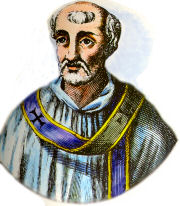
What is a Doctor of the Church?
In Roman Catholicism, this title is given to a saint from whose writings the whole Christian Church is held to have derived great advantage and to whom "eminent learning" and "great sanctity" have been attributed by a proclamation of a pope or of an ecumenical council. This honor is given rarely, only posthumously, and only after canonization. ... The Roman Catholic Church has to date named 33 Doctors of the Church. Among these 33 are 25 from the West and 8 from the East; 3 women; 18 bishops, 29 priests, 1 deacon, 2 nuns, 1 lay woman; 24 from Europe, 3 from Africa, 6 from Asia. -- http://en.wikipedia.org/wiki/Doctor_of_the_Church
A Return to Modesty: Discovering the Lost Virtue by Wendy Shalit
I should convert the first chapter into a downloadable pdf.
Warning: The book uses a few immodest examples to highlight specific points.
Warning: The book uses a few immodest examples to highlight specific points.
The Navarre Bible: Text and Commentaries
Bishop-approved Catholic commentary of Scripture linked to as much historical Church documentation as possible.
For the daily mass:
Since people have been electronically providing the Navarre Bible commentary for every mass in the last 10 years, a good chance exists in finding chapters that you want.
Example method of finding chapters from the Navarre Bible on the net:
For the daily mass:
Since people have been electronically providing the Navarre Bible commentary for every mass in the last 10 years, a good chance exists in finding chapters that you want.
Example method of finding chapters from the Navarre Bible on the net:
- Search http://groups.google.com/: navarre "John 1"
The Sinner's Guide by Venerable Louis of Granada

St. Teresa of Avila (Church Doctor) stated that this work of Venerable Louis converted over 1,000,000 souls in her day. She, along with St. John of the Cross (Church Doctor), St. Francis de Sales (Church Doctor), St. Charles Borromeo, St. Vincent de Paul, and St. Rose of Lima, all counted it among their favorite spiritual books.Download shortened PDF (guidance)
- http://sites.google.com/site/catholiclifetimereadingplan/file-cabinet/sinners_guide_brief.pdf (32 pages on A4 paper)
By Venerable Louis of Granada (1504-1588) - The Writer of the Spanish Empire
Ethical Relativism (debunked) by Allen Wood
Very strong argument against the case for ethical relativism.
Reasons for the Faith against Muslim Objections by St. Thomas Aquinas (Church Doctor)
This has very concise explanations for multiple basic tenets of Christian belief.
Download link for PDF:
Download link for PDF:
Created and Redeemed: The Universal Message of John Paul II's Theology of the Body (4 DVD set)
Theology of the Body course composed in 8 lectures of 1 hour each. This has been the fundamental tool used in a local "True Love Waits" 8-week program with Catholic Youth Ministries.
- Christopher West speaks with minimum jargon and a maximum of understability.
The Twelve Steps To Holiness And Salvation by St. Alphonsus De Liguori (Church Doctor)
This book is in my top four. It is very concise. It may be lacking just a little in "why catholic?", but I like this book for the ground it covers in such a small space. "Love your enemies" is given a section pretty early, and detraction and gossip are given a few important pages in "Love for neighbor".
The 12 virtues we must all acquire to be happy in this world and to save our souls. Many of our readers rate this the most beautiful and inspiring book they have ever read. For absolutely all! One of TAN's top 5 books. Impr. 216 pgs, PBThis title may be comparable to "The Great Means of Salvation and Perfection" by Alphonso Liguori. I do not know yet. :)
My Sister St. Therese by Sr. Genevieve of the Holy Face (Celine Martin)

This may be my favorite book overall. I like it even better than the autobiography, because it provides many practical examples of everyday life by Therese's best friend and sister, Celine.
A little classic that is like a second Story of a Soul! Conversations, anecdotes of St. Therese, her teachings, hidden virtues and amusing remarks, etc -- recorded by her sister Celine in the convent. Shows the "Little Way" in practice in daily life.
Story of a Soul by St. Therese of Lisieux (Church Doctor)
This is a classic, and most catholic libraries will have multiple copies. She died at the age of 24 in 1897. Mother Therese of Calcutta named herself after St. Therese of Lisieux.
- PDF file [A4 paper] -- http://sites.google.com/site/catholiclifetimereadingplan/file-cabinet/StoryofaSoul.pdf?attredirects=0
By the Apostolic Letter Divini Amoris Scientia ("The Science of Divine Love") of October 19, 1997, Pope John Paul II declared her one of the thirty-three Doctors of the Universal Church, one of only three women so named (the others being Teresa of Avila (Saint Teresa of Jesus) and Catherine of Siena). Thérèse was the only saint to be given recognition as a Doctor of the Church during Pope John Paul II's pontificate. -- http://en.wikipedia.org/wiki/Th%C3%A9r%C3%A8se_de_Lisieux
The Picture Bible by Iva Hoth
Picture Bible by Iva Hoth [La Biblia Ilustrada] -- 800 page comic book format, follows the plot
- While looking in a catholic bookstore in Korea, I picked up a hand-traced version of the Picture Bible (in Korean). About a third of it was completed with no credit to the original author. However, in authority of the content it contained was the seal of the archbishop of Korea on the inside cover. :)
Bible Basics by Steve Kellmeyer
...an easily-referenced index to the Scriptural underpinnings of Catholic doctrine and dogma, with a minimum of exegesis.I love the "wayback machine" internet archive -- a sample of the web circa 1999 and beyond.
- http://web.archive.org/web/19990225162008/clara.franuniv.edu/students/skellmeyer/
- http://web.archive.org/web/*/http://clara.franuniv.edu/students/skellmeyer
- http://web.archive.org/web/*/http://catholic-scriptures.homepage.com
Friday, August 1, 2008
Subscribe to:
Posts (Atom)

 Posts

